

Social Pathology: The Diagnostics of Dysfunction
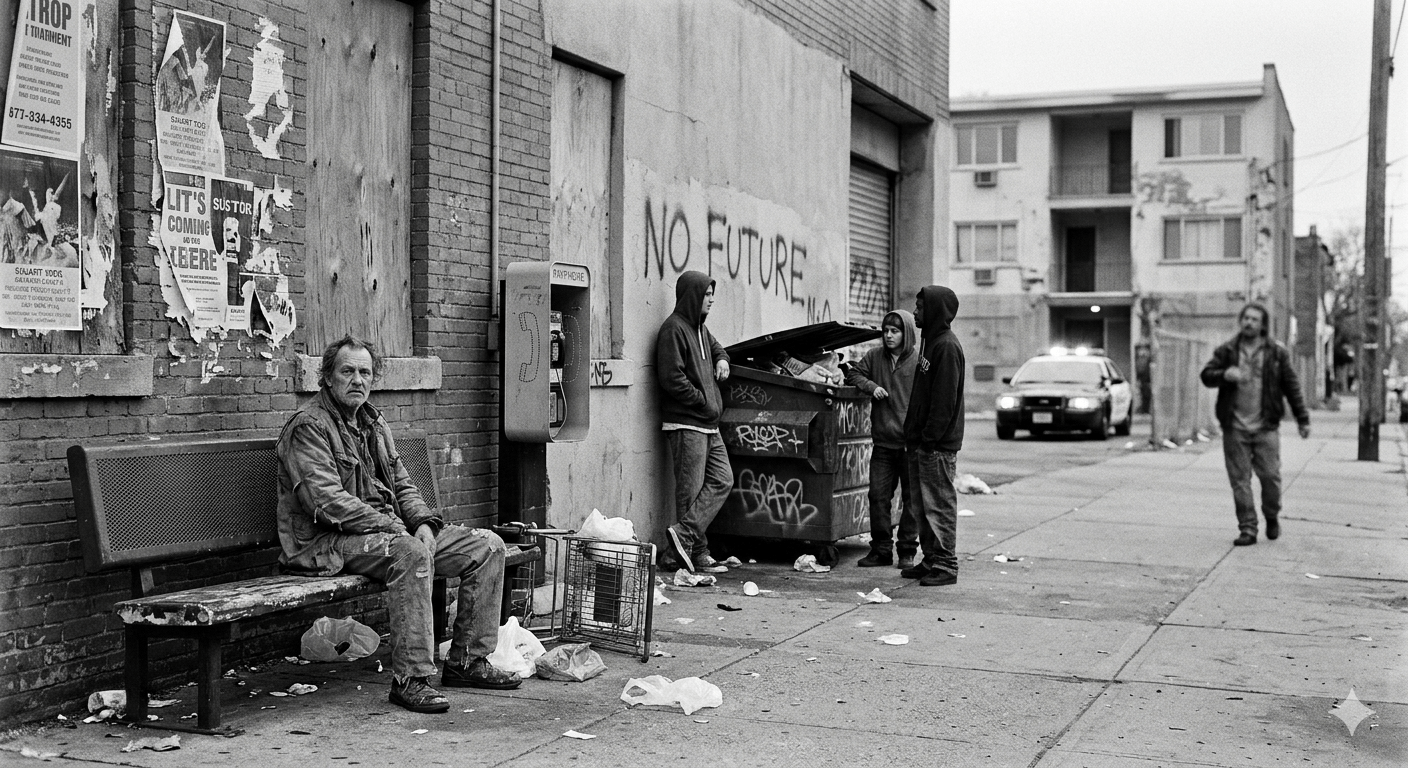
1. Definition: Society as a Pathological Organism
In the developmental history of 19th and early 20th-century sociology, Social Pathology is defined as a theoretical framework that analyzes social problems—such as crime, poverty, alcoholism, and mental illness—as "diseases" or dysfunctions of the social body. Borrowing terminology from medicine and biology, this approach posits that a healthy society exists in a state of Equilibrium and that any divergence from established norms is a symptom of an underlying structural malfunction. Unlike simple descriptions of social issues, social pathology seeks to "diagnose" the root causes of these "maladies" and suggest "corrective treatments" to restore social order. This definition implies a commitment to Nomothetic Authority, where social phenomena are evaluated against a standardized benchmark of "normal" functioning.
For a sociologist, the definition of social pathology signifies the study of the Authoritative Allocation of Normality. It involves the belief that the Social organism can be clinical and mapped. By defining certain behaviors as "pathological," the discipline investigate how Social Control mechanisms are mobilized to "cure" or isolate the deviant parts of the Social Fabric. This successfully transitioned the study of humanity from "moral philosophy" to a Rationalized Science of social hygiene, established through a rigorous internal moral code of Order and Stability, providing the foundational logic for modern Applied Sociology and social work.
2. Concept & Background: The Organic Analogy
The conceptual background of Social Pathology is rooted in the Organic Analogy pioneered by Herbert Spencer and later refined by Émile Durkheim. Spencer argued that society, like a biological organism, evolves from "simple to complex" through the differentiation of its parts. In this background, "Pathology" occurs when the Structural Differentiation of institutions fails to integrate properly, leading to a state of Social Disorganization. The background represents a fundamental shift in the Epistemology of Discovery: the realization that the "Social Fact" of crime or poverty is not a product of individual sin, but a byproduct of a Mechanical system in friction.
Intellectual history shows that social pathology provided the "Cultural Capital" for the Progressive Era reforms in the West. It moved the focus of social science toward the study of Environmental Determinism—the idea that the "disease" of poverty is caught from the environment of the slum. Understanding this concept requires recognizing social pathology as a theoretical prerequisite for the welfare state. This perspective established the foundation for Functionalism, proving that the stability of the Collective Conscience depends on the effective "pruning" or "healing" of its dysfunctional members, established through a rigorous internal moral code of Integration.
3. Functionalist Perspective: Robert Merton’s Strain Theory
Robert Merton (1938) radicalized the study of social pathology by moving away from biological metaphors toward Structural analysis. He argued that pathologies like crime are a result of Strain—the gap between culturally defined goals (e.g., the American Dream) and the Authoritative Allocation of legitimate means to achieve them.
From this perspective, pathology is a Rational Response to an irrational environment. Merton identified five types of adaptations: Conformity, Innovation (the path of the criminal), Ritualism, Retreatism, and Rebellion. This study proves that what we call "social disease" is actually a functional byproduct of Incentive Structures. For sociologists, Merton’s work remains the blueprint for identifying how Anomie is manufactured by the social system itself, reconciling Knowledge, Power, and the Body within a stratified economic aggregate.
4. Conflict Theory: Pathology as Systemic Exploitation
In contrast to the "malfunction" view, Conflict Theorists (Marx, Engels) argue that what sociologists call "social pathology" is actually the Logical Outcome of systemic inequality. They posit that the Bourgeoisie define the consequences of their own Structural Violence (poverty, lack of healthcare) as the "pathology" of the poor.
From this viewpoint, the "disease" is the capitalist Mode of Production itself. Conflict theorists argue that Alienation is the primary pathology of modern life, where individuals are stripped of their Agency by the requirements of the market. This critique reveals that social pathology often acts as a Hegemonic Mask that blames the victim while preserving the Authoritative Allocation of wealth. This successfully moved the focus of the discipline toward the study of Ideological Hegemony, proving that the "cure" for social pathology is not social work, but Social Revolution.
5. Labeling Theory: The Construction of the "Sick" Society
Labeling Theorists (Howard Becker, Edwin Lemert) challenge the idea that pathologies are objective facts. They argue that "social pathology" is an Authoritative Allocation of Labels by Moral Entrepreneurs. Becker famously stated that "deviance is not a quality of the act... but a consequence of the application by others of rules."
From this perspective, a behavior becomes a "pathology" only when it is labeled as such by doctors, lawyers, or the state. This perspective highlights the Power of the Master Status: once a person is labeled "insane" or "criminal," their Life Chances are fundamentally altered by the Social Logic of the label. This study proves that "Reality" is a Social Construction, reconciling Knowledge, Power, and the Individual through the study of societal reaction rather than individual action.
6. Indian Contextualization: Pathologies of Tradition and Modernity
In Indian Society, social pathology is analyzed through the unique intersection of Traditional Hierarchy and Colonial Modernity. B.R. Ambedkar famously described the Caste System as a "Social Pathology" that prevented the development of Fraternity and Social Solidarity. He argued that the ritual logic of Purity and Pollution was a "poison" in the Social Fabric, necessitating the "Annihilation of Caste."
Furthermore, the persistence of Manual Scavenging in India is viewed as a Pathology of Shame—a structural failure where Institutionalized Stigma forces a specific Subaltern group into dehumanizing labor. Contemporary India also faces Communalism, which sociologists like Bipan Chandra have analyzed as a "Social Cancer"—a pathology utilized for Democratic Mobilization and the creation of Vote Banks. This proves that in the Indian Context, pathology is a Political site, where the quest for Substantive Justice must struggle against the Structural Violence of the past, established through Constitutional Morality as the primary "therapeutic framework" for the nation.
7. Case Study: Chicago School & Urban Disorganization
The Chicago School (1920s-30s), led by Robert Park and Ernest Burgess, serves as the definitive case study for Ecological Social Pathology. They analyzed the "Transition Zone" of Chicago to prove that crime and poverty were not products of the people's ethnicity, but products of the Social Disorganization of the space.
Sociologically, this study reveals the Morphological opening for pathology. When traditional Social Control (family, church) breaks down due to rapid Urbanization and Migration, "disease" flourishes. This study confirms that Spatio-Temporal variables are the primary drivers of pathology. For sociologists, the Chicago study remains the blueprint for identifying how Structural Shifts in Geography lead to a total reconfiguration of the Social Contract, reconciling Knowledge, Power, and the City in a quest for stability.
Mains Mastery Dashboard
The concept of Social Pathology represents a fundamental epistemological tension in sociology, transitioning the discipline from the moral condemnation of "Deviance" to the Structural Diagnosis of system failure. As articulated by Robert Merton in his Strain Theory, social pathology arises from the Structural Disjuncture between culturally prescribed goals and the institutionalized means to achieve them. In a society that values "Material Success" but denies Substantive Equality of opportunity, individuals experience a state of Anomie. This leads to pathological adaptations—such as Innovation or Rebellion—where the Authoritative Allocation of self-interest bypasses the Legal-Rational framework, proving that "disease" is often a Rational survival strategy in a dysfunctional social organism.
In the Indian context, this diagnostic lens is essential for understanding the "Pathology of Caste." As analyzed by B.R. Ambedkar, the caste system is not a functional division of labor but a "division of laborers" maintained through the pathology of Graded Inequality. This represents a profound gap between the "Sacred Values" of Dharma and the "Secular Realities" of Structural Violence and exclusion. The "Stigma" of untouchability acts as a Pathological Label that limits the Life Chances of the Subaltern, ensuring that the Collective Conscience remains fragmented. Thus, achieving Social Justice in India requires more than mere welfare; it requires a radical "Institutional Therapy" based on Constitutional Morality to deconstruct the pathological constructions of the past.
In CONCLUSION, social pathology is a Total Social Fact that is inherently reflexive. Its sustainability as a concept depends on moving beyond the "Medical Model"—which often blames the victim—toward a Reflexive Humanism. Reconciling Knowledge, Power, and Agency in the 21st century requires recognizing that "diseases" like communalism or extreme poverty are not natural occurrences but Human Creations. Sociology ensures that the study of dysfunction serves the ends of Human Liberation, proving that the progress of a nation is measured by its ability to "heal" its Social Fabric through inclusive and equitable Substantive Progress.
Revision Strategy: Keywords
- Organic Analogy: Comparing society to a living body to understand health and disease (Spencer).
- Strain Theory: The gap between goals and means as a source of pathology (Merton).
- Anomie: A state of normlessness and social derangement (Durkheim).
- Social Disorganization: The breakdown of institutions in the urban environment (Chicago School).
- Moral Entrepreneur: Individuals who seek to label others as deviant or pathological (Becker).
- Structural Violence: Injustice built into the social system (e.g., Caste exclusion).