

Urbanism: The Spirit of the Metropolis
1. Definition: The Authoritative Allocation of Meaning
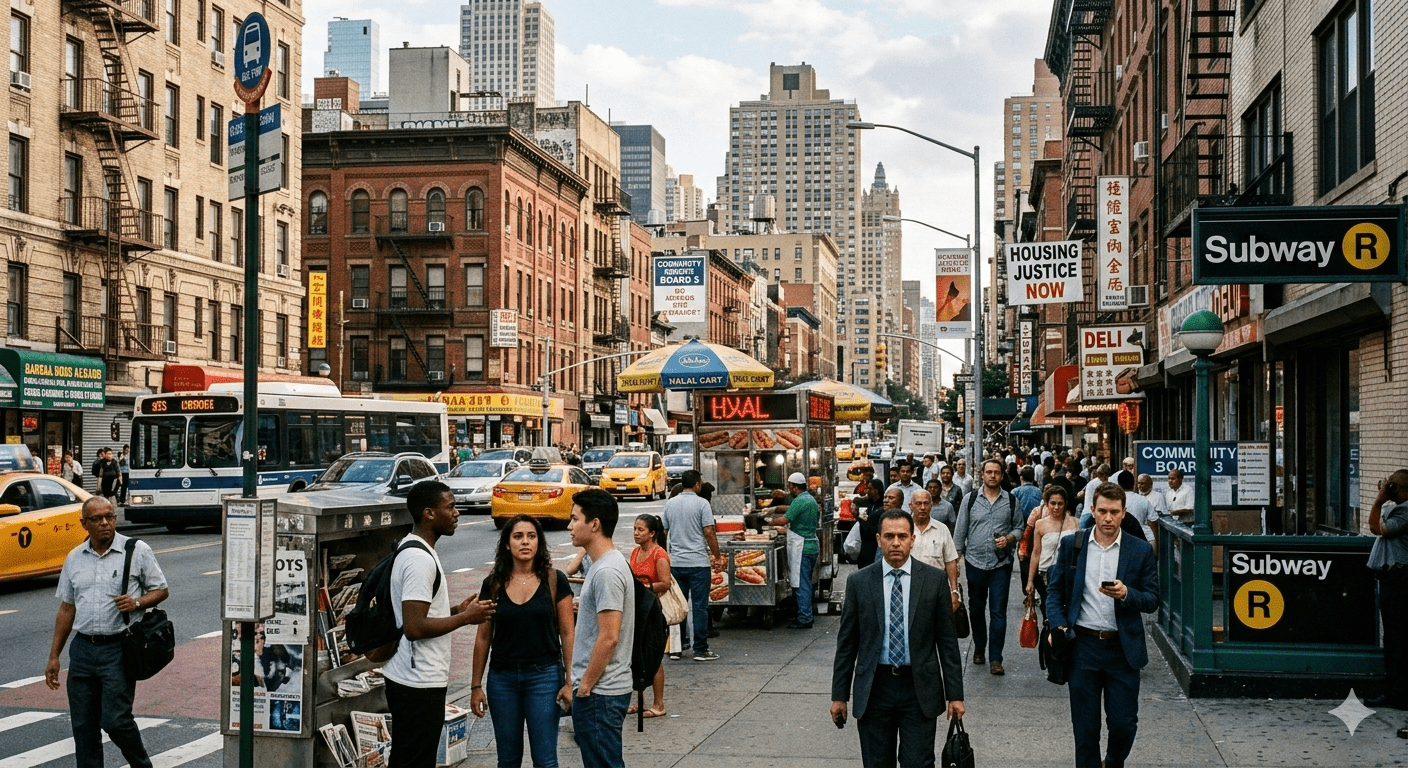
In the rigorous theoretical landscape of modern social inquiry, Urbanism is defined as the distinct culture, lifestyle, and social psychological patterns characteristic of metropolitan inhabitants. Unlike Urbanization (which refers to the quantitative process of population concentration), urbanism identifies the qualitative shift in human association. As articulated by Louis Wirth, it is a "Way of Life" that emerges when social relations become impersonal, segmental, and utilitarian. This definition implies a commitment to Reflexive Inquiry, transitioning the study of humanity from the "Mechanical" stability of the village to the complex Symbolic Logic of the city. For a sociologist, urbanism is the study of the Collective Conscience in a state of fragmentation and diversity.
The definition of urbanism encompasses the Authoritative Allocation of Labels such as "anonymity," "diversity," and "mobility." It involves the belief that the physical environment of the city dictates a specific Social Logic of interaction. By defining urbanism as a Meaningful Performance, the discipline investigate how social institutions—the café, the subway, the park—facilitate a new form of Social Solidarity (Organic). This successfully transitioned the study of the metropolis from "civil engineering" to a Rationalized Science of Subjectivity, providing the Analytical Authority required to understand the modern National Identity as a diachronic outcome of intense urban experiences, established through a rigorous internal moral code of Tolerance and Intellectualization.
2. Concept & Background: The Culture of Density
The conceptual background of Urbanism is rooted in the early 20th-century effort to understand the Great Transformation of the human spirit. Historically, the shift from Gemeinschaft (Community) to Gesellschaft (Association) was not just economic but psychological. The background represents a fundamental shift in the Theory of Knowledge: the realization that density and diversity create a unique Social organism.
Intellectual history shows that the concept of urbanism moved the focus of social science toward the study of Secularization and Internalization. Understanding this concept requires recognizing that as a society modernizes, the Authoritative Value of land dictates the Spatio-Temporal rhythm of its inhabitants. This perspective established the foundation for Interpretive Sociology, proving that the stability of the Social Fabric depends on individuals' ability to manage Sensory Overload. It moved the focus of the discipline toward the study of Civil Inattention and the Rationalization of everyday life, established through a rigorous internal moral code of Sophistication.
3. Louis Wirth: Urbanism as a Way of Life
Louis Wirth (1938) provided the definitive sociological grammar for urbanism. He argued that the city produces a specific social structure through three primary variables:
- Large Size: Leads to Anonymity and the fragmentation of the primary group. Relationships become "segmental"—we know individuals only in specialized roles (e.g., as a clerk or a passenger).
- High Density: Produces Sensory Overload and the need for emotional distance. It leads to the Blasé Attitude (Simmel) where individuals ignore their neighbors to preserve their sanity.
- Heterogeneity: Brings together people of diverse backgrounds, breaking down Caste and Class boundaries while fostering Rationalized Tolerance and a sense of Alienation.
Wirth’s analysis proves that the "utility" of urbanism is its ability to facilitate Secondary Relationships. This perspective highlights the Duality of Agency: while the city offers Individual Freedom, it also results in a state of Anomie, reconciling Knowledge, Power, and the Body within a fragmented systemic aggregate.
4. Georg Simmel: The Metropolis and Mental Life
Georg Simmel provided the definitive psychological-sociological profile of urbanism. He argued that the metropolitan environment is characterized by an "intensification of nervous stimulation." To survive, the urbanite develops a "Blasé Attitude"—a state of detachment where everything appears in an equally grey hue.
From this viewpoint, urbanism is a Calculative Logic. Because of the money economy and the stopwatch, urban life becomes Objective and Impersonal. Simmel’s analysis reveals that the Social organism in the city prioritizes the Head over the Heart. This critique highlights the Structural Violence of the clock, proving that the progress of the Social Fabric is a diachronic outcome of Rationalization, established through a rigorous internal moral code of Reserve and Distance.
5. Interactionism: Goffman and Civil Inattention
From the Symbolic Interactionist perspective, most notably Erving Goffman, urbanism is an ongoing Performance of mutual avoidance. Goffman introduced the concept of "Civil Inattention"—the process whereby strangers acknowledge each other’s presence in public but then quickly look away to respect each other’s Privacy and Autonomy.
Interactionists analyze how the Authoritative Allocation of Space (the sidewalk, the elevator) dictates the Symbolic Logic of gestures. This perspective highlights the Transformative Agency of the urbanite, who manages their Front Stage to navigate a sea of strangers. This successfully moved the focus of the discipline toward the study of Impression Management in anonymous settings, proving that the stability of the Social organism depends on these subtle micro-negotiations of Knowledge and Power.
6. Conflict Theory: The Urban Divided
In contrast to the focus on "Tolerance," Conflict Theorists view urbanism through the lens of Inequality and Segregation. They argue that the "Urban Culture" is not a monolith but is carved up into Spatio-Temporal silos based on Class and Caste.
From this viewpoint, Urbanism involves the Social Closure (Weber) of the elite. While the middle class enjoys the "lifestyle" of the city, the Subaltern experience urbanism as Displacement and Stigma. Conflict theorists analyze Gentrification as the Authoritative Allocation of culture by capital, leading to the Structural Violence of the "Dual City." This critique reveals that the Social Logic of the city is often a Hegemonic Mask that obscures the Alienation of the marginalized.
7. Indian Contextualization: The Rurban Continuum (Paper II)
In Indian Society, urbanism is a Synthetic process characterized by what M.N. Srinivas called the "Rural-Urban Continuum." Unlike the West, Indian urbanites often maintain strong ties to their village roots, resulting in "Functional Jointness" despite spatial nuclearity.
Contemporary India illustrates the rise of "Digital Urbanism"—the use of smartphones to bridge traditional identities with modern consumption. Sociologist Ashish Bose analyzed "Over-urbanization" in India, where the urban "Way of Life" (aspiration) spreads faster than the Structural Differentiation of the economy. Furthermore, the Caste System has adapted into the city through Residential Segregation, proving that the "Sacred" hierarchy and "Secular" city coexist in a state of Multiple Modernities. This transition proves that the National Identity of India is anchored in a Reflexive negotiation between the Sanskari home and the Globalist workspace.
8. Case Study: Louis Wirth’s Study on Chicago
Louis Wirth’s 1938 study, Urbanism as a Way of Life, remains the definitive case study for the Morphological impact on Psychology. Wirth analyzed the residents of Chicago to prove that the Structural variables of size and density lead to a breakdown of Social Solidarity.
Sociologically, this case study reveals the Transformative Power of the Metropolis. It proved that Anomie and Crime were not products of "biology" but products of the Anonymity manufactured by the environment. This study confirms that Urbanism is the primary prerequisite for a sense of Individualism in the modern world. For sociologists, Wirth’s work remains the blueprint for identifying how Structural Shifts in Space lead to a total reconfiguration of the Social Contract, reconciling Knowledge, Power, and the Body within a dense systemic aggregate.
Mains Mastery Dashboard
Urbanism represents the epistemological and psychological core of modern social inquiry, acting as the primary mechanism for understanding the shift from Mechanical to Organic Solidarity. As articulated by Louis Wirth, urbanism is a distinct "Way of Life" that is not merely defined by population counts but by a fundamental shift in the nature of Social Interaction. Through his triad of Size, Density, and Heterogeneity, Wirth unmasked the Structural logic of the city: as numbers increase, relationships become impersonal and segmental. This shift successfully moved the study of humanity from "village communities" to a profound inquiry into the Social Fabric of the metropolis, providing the Analytical Authority required to navigate the Anomie of the industrial age.
This structural transition is accompanied by a profound psychological adaptation, which Georg Simmel termed the "Blasé Attitude." To manage the "intensification of nervous stimulation" produced by high-density urbanism, individuals develop a state of Emotional Detachment and reserve. In this view, the urbanite utilizes Intellectualization and the Calculability of the money economy to protect the Individual Agency from the Sensory Overload of the collective. In the Indian context, this "Way of Life" is characterized by a Synthetic Tension, where the "Secondary Relationships" of the urban workspace coexist with the "Sacred Bonds" of Caste and Family. This transition proves that the National Identity is a diachronic outcome of Multiple Modernities, where the city offers a "Laboratory" for both Emancipatory Freedom and Structural Violence.
In CONCLUSION, urbanism is a Total Social Fact that remains the prerequisite for a Reflexive social science. The sustainability of a modern social order depends on achieving a Dynamic Equilibrium—ensuring that the Anonymity of the city does not lead to the total Alienation of the spirit. Reconciling Knowledge, Power, and Agency in the 21st century requires moving beyond "Mechanical Density" toward a Humanistic Urbanism that fosters Substantive Progress. Sociology ensures that the study of the metropolis serves the ends of Human Liberation, proving that the progress of a nation is measured by its capacity to maintain Human Dignity within the intense friction of the Global Village.
Revision Strategy: Keywords
- Blasé Attitude: The urban inhabitant’s emotional detachment to manage stimuli (Simmel).
- Civil Inattention: The polite ignoring of strangers in public spaces (Goffman).
- Secondary Relationships: Utilitarian and segmental social bonds based on roles.
- Rurbanization: The process where rural areas adopt urban culture and lifestyle.
- Urbanism: A sociological way of life defined by diversity and mobility (Wirth).
- Anomie: A state of normlessness arising from fragmented social control.
